PPC – Pay Per Click
Digital Advertising
Digital Advertising
The origins of PPC—Pay Per Click—digital advertising can be traced back to the 1990s when it emerged as a groundbreaking method for online promotion. The concept was pioneered by platforms like GoTo.com (Wikipedia), which later became part of Yahoo, allowing advertisers to bid on keywords and pay only when their ads received clicks. The real transformation came in the early 2000s when Google launched Google AdWords (now Google Ads), cementing PPC’s role as a fundamental aspect of digital marketing. Despite its widespread use today, the terms “pay per click” and “digital advertising” are often misunderstood or used interchangeably by business owners and the general public, leading to confusion about their specific meanings and how they fit together in a unified strategy. Ultimately, they all sort of came about at the same time…
Our aim is to clarify these concepts—PPC, Pay Per Click, and Digital Advertising—by breaking down each term and illustrating how they are interconnected. Recognizing their individual roles helps in understanding their collective impact, especially when managing your digital advertising budget.


Pay Per Click Also Known As PPC
PPC, or pay per click, is a form of digital advertising where businesses pay a fee each time someone clicks on their ad. Unlike traditional advertising models, where payment is based on impressions or views, PPC ensures you only pay when a potential customer engages with your ad by clicking on it. This advertising method places your business directly in front of users who are actively searching for products or services related to what you offer, making it a highly targeted online approach. PPC is commonly used on search engines like Google and Bing, but it also extends to social media platforms like Facebook and LinkedIn plus display networks, and yes, even YouTube where ads appear in front of relevant, and maybe not so relevant, audiences.
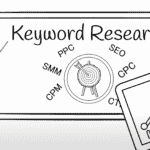
To understand PPC, it’s important to know its key components. At the core is keyword bidding, where advertisers bid on specific keywords or phrases that users might search for when looking for related products or services. Ad placement is influenced by these bids, as well as other factors like ad quality and relevance. Cost-per-click (CPC) refers to the actual amount paid for each click, which varies depending on competition for the keyword and the ad’s quality score. The quality score is determined by factors such as the relevance of the ad copy, landing page experience, and expected click-through rate. These elements work together to ensure ads are shown to the right people at the right time.
The PPC model operates through an auction-based system, where search engine platforms like Google Ads and Bing Ads determine which ads to display for a given search query. When a user performs a search, an automated auction takes place, where ads that match the search criteria compete for placement. The platform evaluates each ad’s bid amount and quality score, awarding higher placements to ads that offer a combination of competitive bidding and high quality. Ads with better quality scores can often achieve higher rankings at lower costs, emphasizing the importance of not just bidding aggressively but also optimizing the ad content and landing pages for relevance.
Turning ideas into organized systems and plans. It’s like putting all your digital marketing efforts together into one big, coordinated campaign. With digital marketing consulting, you also get valuable advice on things like how your website is set up, keeping track of what’s happening with analytics, making the most of social media, email marketing, and improving your search engine ranking through SEO. These extra pieces can supercharge your online presence and help you connect with even more people.
Despite its benefits, there are some common misconceptions about PPC that can discourage businesses from fully utilizing it. Many perceive PPC as overly complex or expensive, fearing that without large budgets, they won’t see meaningful results. However, PPC can be tailored to fit almost any budget, with smart bidding strategies and targeted campaigns yielding high returns. Another misconception is that PPC requires constant, time-consuming management. While regular monitoring and optimization are necessary, automated tools and AI-driven features can streamline the process, making it accessible even for those with limited time or resources.
Fully Customizable
Demographics
Highly Measurable
Search engine marketing: Those with the most traffic wins
When it comes to search engine marketing, PPC plays a central role in driving visibility and traffic to your website. SEM refers to the practice of using paid advertising on search engines to promote a business and its products or services. PPC campaigns are a key component of SEM, enabling businesses to bid on specific keywords that are relevant to their offerings. When a user searches for those keywords, the business’s ad appears prominently in the search results, often at the top or bottom of the first page. This prime positioning helps businesses capture the attention of users who are actively seeking solutions, making SEM a highly effective channel for lead generation and customer acquisition.
Google Ads has proven to be a powerful tool for businesses of all sizes, helping them reach targeted audiences and grow their customer base. For local businesses, Google Ads offers the ability to target specific geographic areas, ensuring that their ads are seen by users who are most likely to visit their locations or seek their services in-person. Features like Local Search Ads, which appear on Google Maps, allow businesses to capture the attention of users searching for nearby consumership. This level of precision targeting is highly beneficial for businesses that rely on local foot traffic, making it easier to attract customers and increase brand visibility within their communities.
For larger organizations looking to expand their reach beyond local markets, Google Ads provides a scalable platform for state and nationwide campaigns. By leveraging the platform’s advanced targeting options, such as demographic filters, keyword bidding, and audience segmentation, companies can effectively promote their products and services to a wider audience across multiple regions. The flexibility to adjust budgets, ad copy, and targeting parameters in real-time makes Google Ads an ideal choice for businesses aiming to grow at a regional or national level. Moreover, the availability of performance metrics allows companies to track the success of their campaigns, refine strategies, and maximize return on investment (ROI), making it an essential tool for sustained business growth.
Microsoft Advertising, through its Bing Ads platform, offers a valuable advertising solution for businesses seeking to expand their reach. Bing Ads allows companies to display their ads on Bing search results pages and partner networks, making it a powerful tool for local, state, and nationwide marketing efforts. For local businesses, Bing Ads provides features like location targeting and ad scheduling, ensuring that ads reach customers in specific areas at the most opportune times. Moreover, Bing’s integration with Microsoft products, like Windows and Xbox, offers additional touchpoints to reach users, enhancing visibility across different platforms.
One notable difference between Bing Ads and Google Ads lies in the demographic that Bing tends to attract. Bing users are often slightly older, with a higher percentage of users aged 35 and over compared to Google’s younger audience. Additionally, Bing has a higher concentration of users with higher incomes, as the platform is popular among professionals and corporate users who may default to Bing through their work computers. This demographic distinction can be advantageous for businesses targeting affluent consumers or specific professional segments. By leveraging Bing Ads, companies can access this unique audience, potentially facing less competition and lower costs per click than on Google, making it a strategic choice for certain industries and campaigns.
YouTube Ads offers a unique and highly effective advertising platform for businesses looking to expand their reach through video content. As the second-largest search engine in the world, YouTube enables companies to target users based on their search behavior, interests, and viewing habits, making it an ideal platform for local businesses as well as larger organizations. For local businesses, YouTube Ads allows targeted video campaigns to reach nearby audiences, driving foot traffic and raising brand awareness. With options like TrueView ads, businesses only pay when users engage with the video, making it a cost-effective way to generate interest and promote services.
For larger companies seeking state or nationwide expansion, YouTube provides an unparalleled opportunity to reach a broad audience across the U.S. Video ads can be tailored to appeal to different demographics and regions, with advanced targeting options that include age, gender, interests, and even specific YouTube channels. Moreover, the platform’s vast reach and popularity among younger demographics make it particularly effective for brands aiming to engage a more dynamic, tech-savvy audience. With detailed analytics available, businesses of all sizes and shapes can track viewer engagement and campaign performance, refining strategies to maximize the return on investment and ensure long-term growth through video marketing.


Pay Per Click Benefits Businesses in Local Niche Industries
PPC and Pay Per Click explained: What is digital advertising?
Digital advertising, also known as PPC or pay-per-click, has gone through several transformative phases since its inception, beginning in the mid-1990s with the launch of the first banner ad by AT&T, which marked the start of the banner era. As search engines like GoTo gained traction, and later with the introduction of Google AdWords, the industry entered what became known as the channel era. The emergence of social media platforms such as Facebook and Twitter led to the social era, opening up new pathways for advertisers to reach audiences in more interactive and engaging ways. This evolution continued into the native era, where native ads became more prominent, offering a seamless experience by blending into the content around them.
From 2012 to 2019, digital advertising was characterized by the rise of mobile-first strategies, the rapid growth of the Internet of Things (IoT), and the adoption of programmatic advertising through the OpenRTB protocol, which allowed for automated ad buying. The decentralized era emerged in 2018 with regulations like GDPR and CCPA, which brought a renewed focus on data privacy and user consent in digital marketing practices. In 2020, advancements in artificial intelligence and machine learning began to reshape the industry, enabling highly personalized and hyper-targeted advertising strategies to take center stage. During this time, companies like BidsCube began working to democratize access to digital advertising tools.
As the industry continues to evolve, significant changes are on the horizon. The shift away from third-party cookies, set to be phased out in 2024, is prompting new approaches to audience targeting and data usage. The influence of Web 3.0, blockchain technology, and the growth of the metaverse are bringing about innovative advertising formats, while NFTs and cryptocurrencies introduce fresh ways for brands to interact with consumers. Together, these developments are shaping a new era in digital advertising, characterized by more immersive and secure user experiences.


Welcome to The New Edge of Digital Advertising!
Google Ads ROAS
SEO Revenue
Email ROI
Facebook ROI
Digital Advertising throughout a multi-faceted group of Advertising Channels
Looking back at the journey of digital advertising, it’s clear that it has evolved significantly from its humble beginnings. Now, it stands as an essential tool in the digital marketing strategies for businesses of all sizes, with its growth and influence only continuing to expand. The future holds even more exciting advancements and groundbreaking innovations that are set to shape the landscape of digital advertising.
Digital advertising powerhouses transforming marketing through pay per click (PPC)
If you are a business owner with a website, then you understand what it takes to not only get your brand off the ground, but to remain relevant and successful throughout time. Within Google Ads there are several ways to spend money, but these are proven approaches to maintain relevance with great ROI.
Stop playing the guessing game and begin making highly-educated decisions!
Growing Businesses and Delivering Scalability with Digital Advertising
By leveraging industry-leading tools for research, reporting, analysis, and alerts to ensure digital marketing strategies are both effective and data-driven, business owners can now deliver high-quality, measurable outcomes tailored to meet the unique needs of each advertising campaign, all at a cost that aligns with industry standards—offering the same caliber of results you’d expect from an agency, but without the premium price tag. Your commitment to your business goes beyond just achieving impressive metrics; you are deeply invested in the growth and success of your business. STU Enterprises is too! When you partner with us, your success directly impacts ours. We understand that when our partners excel online, it fuels our own progress, making each campaign a shared journey toward mutual achievement.

Digital advertising services now in Denver, CO, Boulder, CO, Colorado Springs, CO, Glenwood Springs, CO, Grand Junction, CO, Winter Springs, FL and now, Hartford, CT










Proven PPC Marketing in Motion!
Schedule your free PPC consultation today.